
Shade sails in wind and snow: tension, anchoring and installation in Switzerland
A shade sail on a wind-exposed site should be planned as a complete system: breathable fabric, an appropriate sail area, firm even tension, robust fittings and structurally suitable anchor points.
Coolaroo has developed breathable knitted HDPE that allows air and heat to circulate through the fabric structure. This is well suited to outdoor shade, but the real resistance of an installation always depends on sail size, geometry, tension, fittings and the supporting structure.
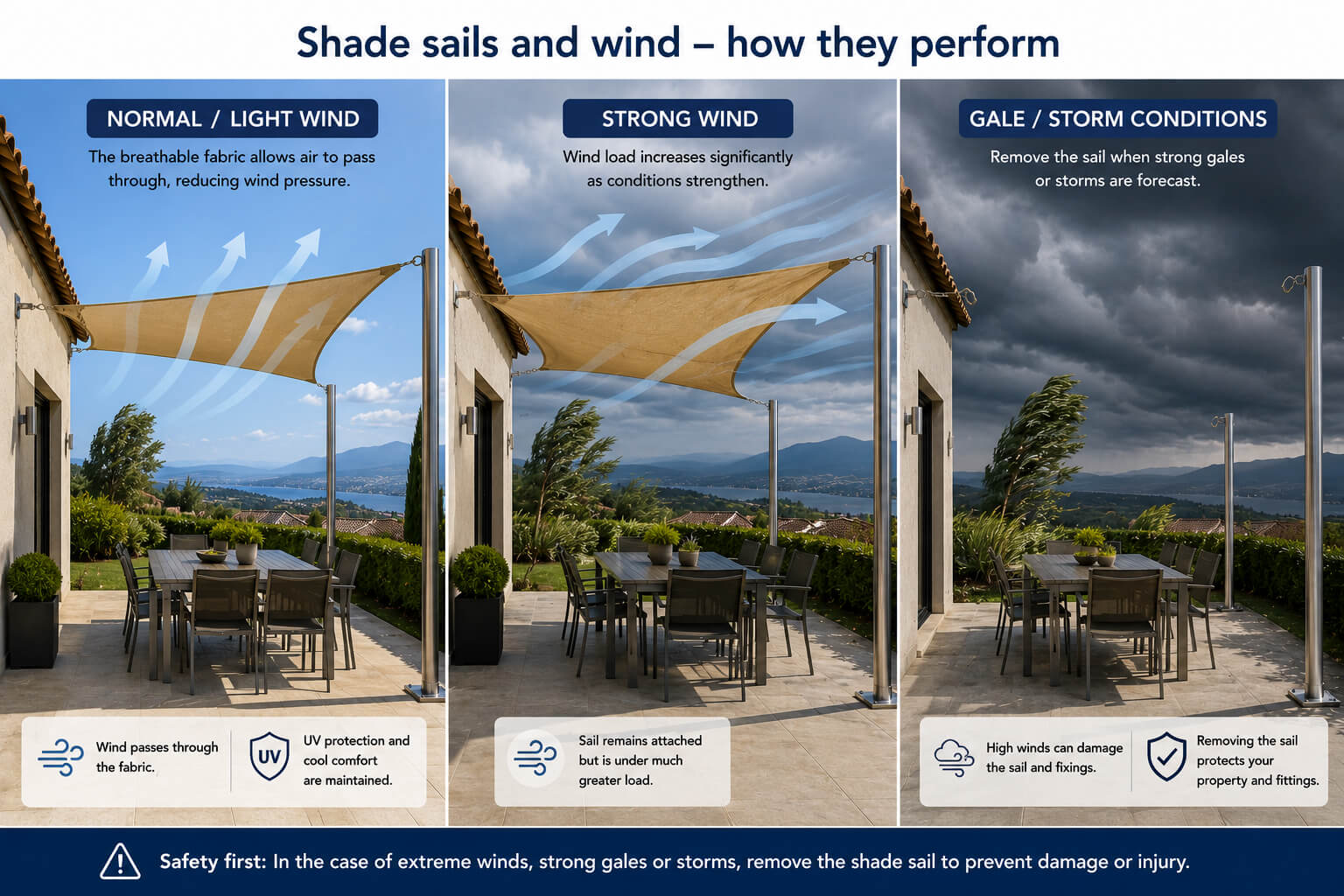
How does a shade sail behave in wind?
In normal to moderate conditions, some air can pass through the knitted Coolaroo HDPE structure. A shade sail therefore does not behave exactly like a fully closed waterproof sheet or membrane. Breathability does not, however, make a shade sail storm-proof or suitable for every weather condition.
As wind strength increases, loads on the sail, tensioners, fittings, posts, walls and anchor points also increase. Firm, correctly planned tension is especially important. In exceptionally strong winds, severe gusts or an approaching storm, remove the sail when it is safe to do so.
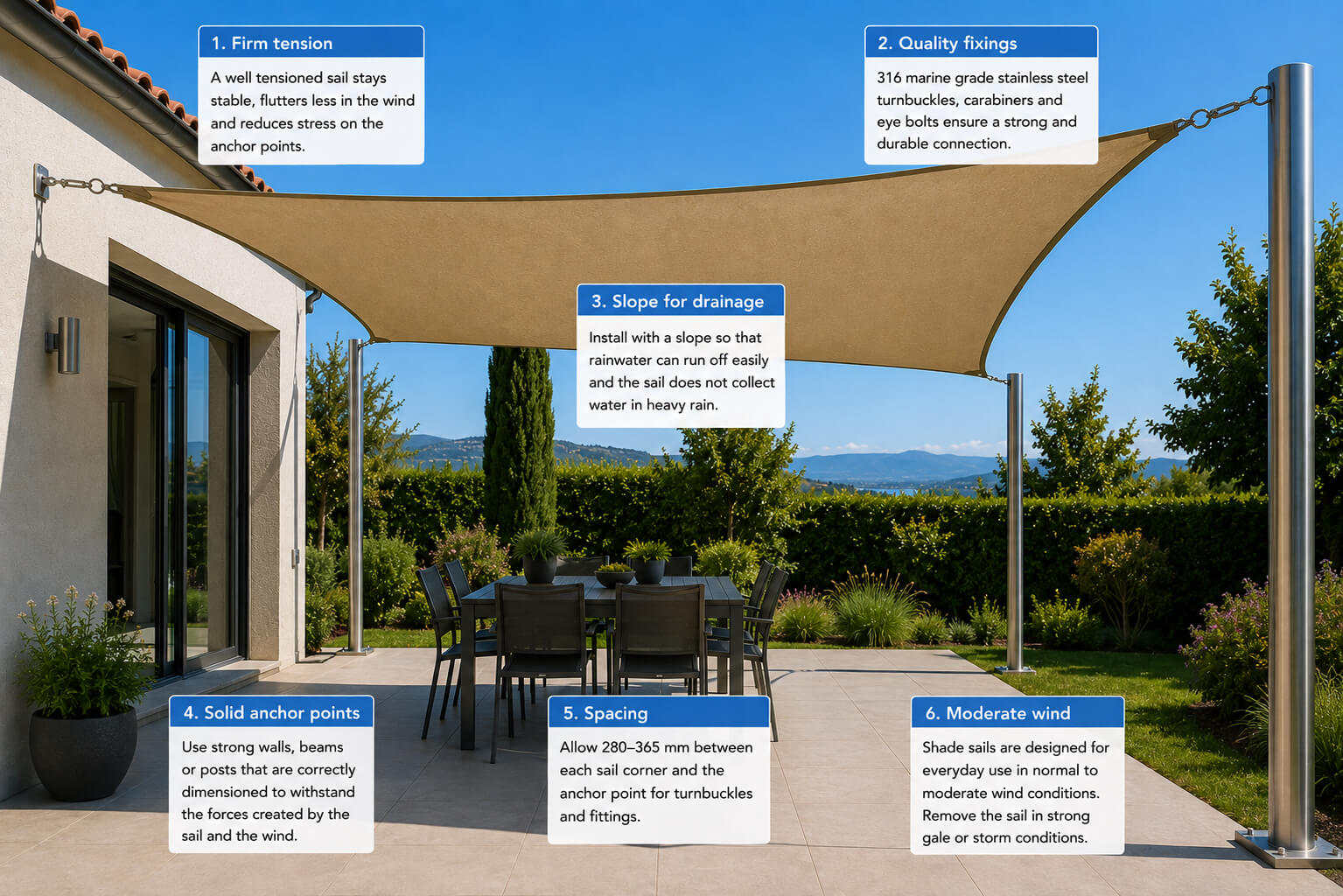
Four essentials for a more exposed location
Breathable fabric
Coolaroo knitted HDPE allows air to circulate through the fabric and lets warm air escape from beneath the shaded area.
Firm tension
A properly tensioned sail holds its intended geometry better. A loose sail moves more and can load its anchor points less evenly.
Appropriate sail area
The larger the exposed sail area, the greater the potential demands on the supporting structure. Size and shape must suit the site.
Strong anchor points
Wall, beam, steel structure or post: every anchor point must be structurally suitable for the loads generated by a tensioned shade sail.
Why does breathable knitted HDPE matter in windy conditions?
Coolaroo uses knitted HDPE designed specifically for shade and airflow. The open knitted structure allows air through the fabric while also allowing heat to escape from beneath the sail.
A closed waterproof membrane serves a different purpose. It intercepts more airflow and also requires more rigorous management of slope and water drainage. For solar shade, breathable HDPE is a fabric construction designed specifically around that use.
Breathable or waterproof? →
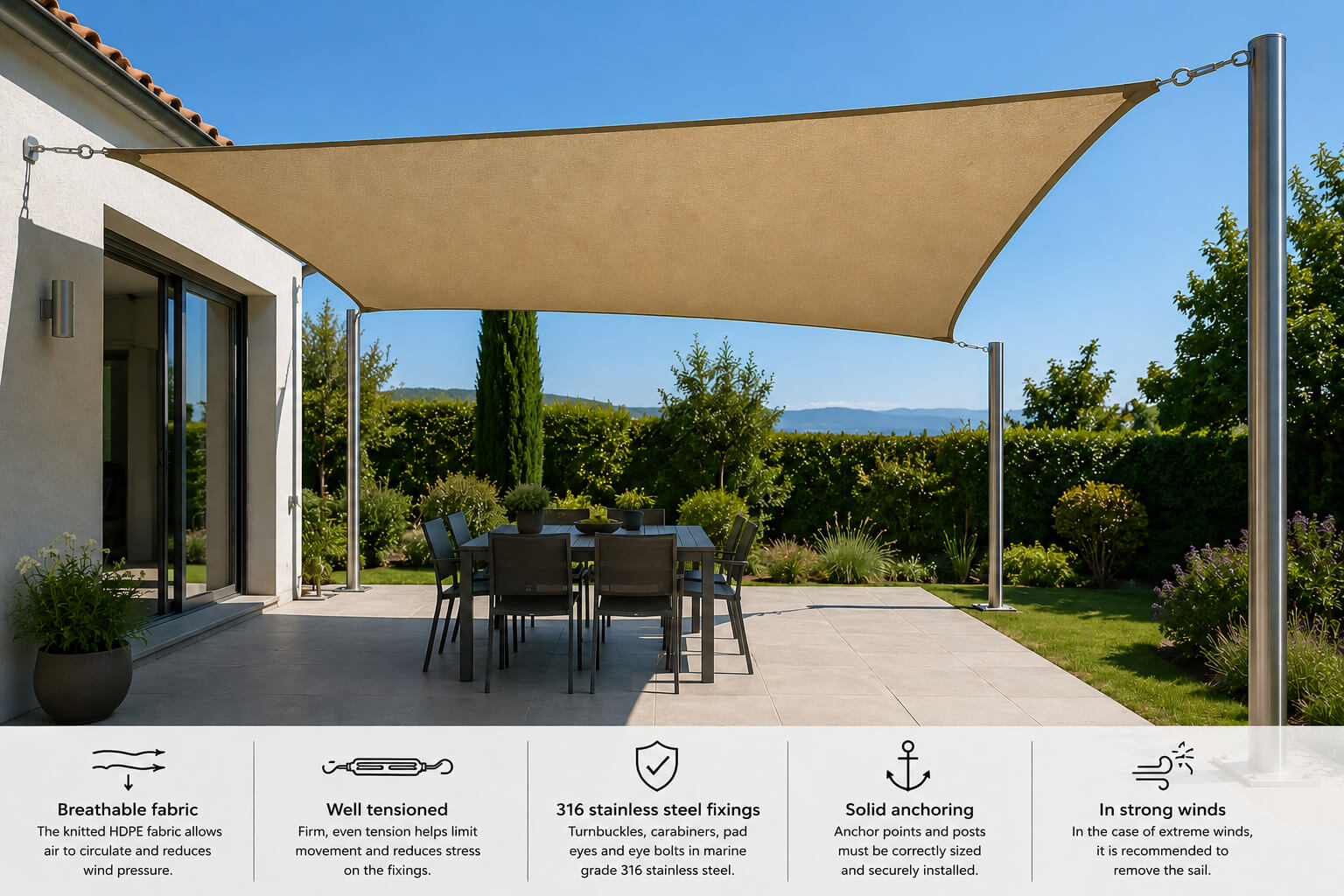
Tension, slope and anchor points
A shade sail should be firmly and evenly tensioned between all its anchor points. Correct tension reduces unnecessary movement, helps the sail retain its intended shape and distributes loads more consistently.
With our standard fixing sets, normally allow 280–365 mm between each sail corner and its anchor point. This provides room for the turnbuckle, snap hook and fixing, together with useful adjustment range.
Our fixing kits use marine-grade 316 stainless steel. Good hardware can never compensate for an inadequate support: walls, posts, beams, screws, plugs and structural anchors must all be appropriate for the substrate and expected loads.
Choose Coolaroo for shade protection designed to last
Coolaroo is a major Australian shade brand with decades of experience in intense sun and high-UV conditions. That experience matters for a shade sail expected to remain outdoors season after season, including through increasingly hot and sunny Swiss summers.
Coolaroo has developed a specialist breathable knitted HDPE fabric for intense sun exposure, high UV conditions and long-term outdoor use, with long-lasting UV protection built into the core of every fibre of the fabric. Depending on range and colour, selected sails block up to 95% of UV, Coolaroo shade products are endorsed by Cancer Council Australia, and fabric warranties run from 5 to 15 years depending on the range.
The resulting shade helps create a more comfortable outdoor space for you and your loved ones while also reducing prolonged sun and UV exposure to outdoor furniture, cushions and furnishings. On an exposed site, those fabric benefits must always be combined with correct tension, suitable fittings and structurally sound anchor points; the sail should still be removed ahead of storms or heavy snow when it is safe to do so.
Which Coolaroo range should you choose for a more exposed site?
Exposure is only one part of the choice. Consider sail area, intended use and the supporting structure together. A stronger sail never replaces properly designed anchor points.
Everyday
The versatile range for normal patio and garden installations, with long-lasting UV protection built into the core of every fibre of the fabric.
Commercial
Our natural choice for more demanding installations, larger terraces, schools, professional spaces and more exposed locations, with warranties of up to 15 years.
DualShade
Commercial-level performance with distinctive two-tone fabric and warranties of up to 15 years.
Snow: an important load for shade sails in Switzerland
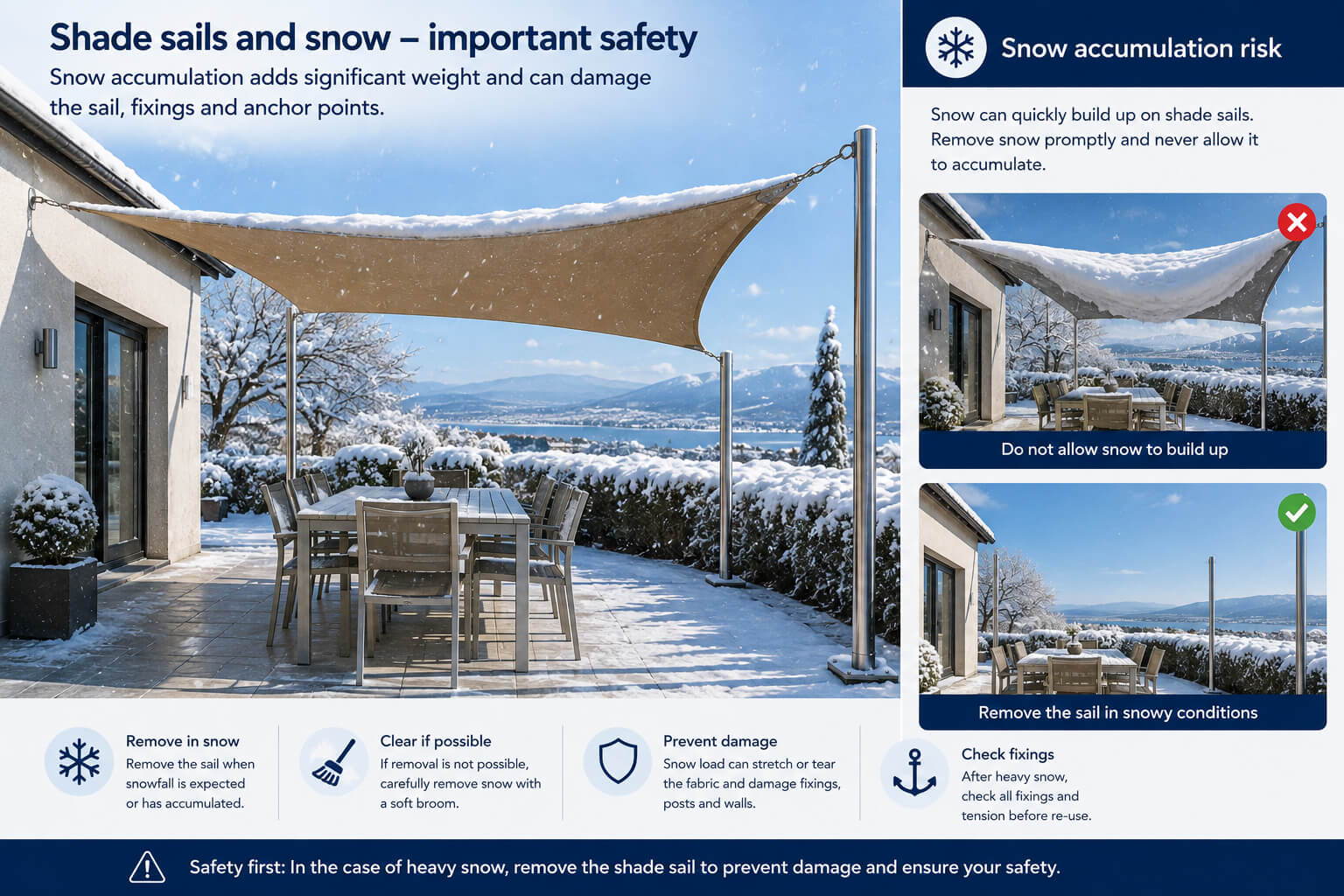
Snow creates a different problem from wind: it adds static weight that can increase rapidly as snow accumulates. Wet snow in particular can impose substantial loads on the sail, fittings, posts, walls and anchor points.
Before significant snowfall, the safest approach is to remove the shade sail in advance. A shade sail is not designed to carry substantial accumulated snow or to remain as a heavily loaded winter cover.
After severe winter weather or before reinstalling in spring, inspect the fittings, tensioning components, seams and structural anchor points before fully tensioning the sail again.
Strong wind, storms or exceptional weather: when should the sail be removed?
A shade sail is not designed to remain installed regardless of conditions. Remove it in exceptionally strong winds, storms, heavy snow or other conditions beyond normal use, when it can be done safely.
A robust installation starts with the complete system
Breathable HDPE, correct tension, marine-grade 316 stainless fittings, strong structural anchors, appropriate sail area and removal during exceptional conditions all work together. The sail alone never determines the resistance of the complete installation.
Choose the right shape and exposed area
A triangular shade sail uses three anchor points and offers flexibility for irregular spaces. Squares and rectangles provide more continuous coverage but also create a larger exposed area. On a windy site, that additional area must be considered when planning the supporting structure.
Plan a shade sail for an exposed location in Switzerland
Start with the area you want to shade and the structural anchor points available. Then choose the shape, size and Coolaroo range and plan the fittings and tensioning space. As a Swiss company with stock in Switzerland, we can also help you choose the appropriate sail and accessories.
